Any sewing machine that sews a straight stitch can make a quilt. But the right machine makes quilting faster and far more enjoyable, with features like a wide table, a roomy throat and feed dogs that drop for free-motion quilting.
Below are the 8 best sewing machines for quilting, from beginner-friendly computerized machines to fast straight-stitch machines built for serious quilters, with the features that matter and who each one suits best.
Our Top Picks
- Best for beginners: Brother XR9550, affordable with a wide table and 8 feet
- Most stitches for the money: Singer 9960 Quantum Stylist, with 600 stitches and a thread cutter
- Best portable: Janome 3160QDC, about 12 pounds with an extension table
- Best for free-motion quilting: Juki TL-2000Qi, with a large throat and 1,500 stitches per minute
Best Sewing Machines for Quilting at a Glance
| Machine | Type | Stitches | Best for | Price |
|---|---|---|---|---|
| Brother XR9550 | Computerized | 165 | Beginners | $ |
| Singer 9960 | Computerized | 600 | Most stitches | $$ |
| Janome 3160QDC | Computerized | 60 | Portable | $$ |
| Juki TL-2000Qi | Straight stitch | 1 | Free-motion quilting | $$$ |
| Brother PQ1600S | Straight stitch | 1 | Speed and big workspace | $$$ |
| EverSewn Charlotte | Computerized | 80 | Budget second machine | $ |
| Elna Elnita ec60 | Computerized | 60 | Quality and portability | $$$ |
| Juki HZL-70HW | Computerized | 80 | Compact with box feed | $$ |
Price guide: $ is an entry-level machine, $$ is mid-range and $$$ is a premium machine. Prices change often, so check the current price on Amazon.
What to Look for in a Quilting Sewing Machine
Start with what you plan to do. If you'll mostly piece quilt tops and send them out to be quilted, almost any reliable machine will do. If you want to quilt your own quilts, look closely at these features:
- Throat space. This is the distance from the needle to the body of the machine. The bigger it is, the easier it is to push a large quilt through. Most home machines have about 6 to 7 inches, and quilting machines have 8 inches or more.
- Extension table. A wide table supports the weight of your quilt, so it doesn't drag and pull your stitches.
- Drop feed dogs. Lowering the feed dogs lets you move the quilt freely for free-motion quilting.
- Even feeding. A walking foot, box feed or pin feed moves all three layers together, so they don't shift or pucker.
- Speed control and needle up/down. Both give you more control when quilting curves or pivoting at corners.
- Thread cutter and knee lifter. These small conveniences save a lot of time over a big project.
- A 1/4 inch foot. Accurate 1/4 inch seams are the key to blocks that line up. Check that one is included or available.
Computerized or Straight Stitch?
Computerized machines sew dozens or hundreds of stitches, including zigzag, decorative stitches and buttonholes. They're the best choice for one machine that does everything.
Straight-stitch machines like the Juki TL-2000Qi and Brother PQ1600S sew only a straight stitch, but they do it faster and with more precision, and they usually have a bigger throat. Many quilters own one alongside a computerized machine.
If you also want to finish seams on garments, see our guide to the best serger sewing machines. And for decorative designs, there are embroidery machines made for quilters.
The 8 Best Sewing Machines for Quilting
1. Brother XR9550 Sewing and Quilting Machine
Best for: beginners and budget-minded quilters
- 165 stitches
- 8 presser feet
- Wide table included
- Drop feed for free motion
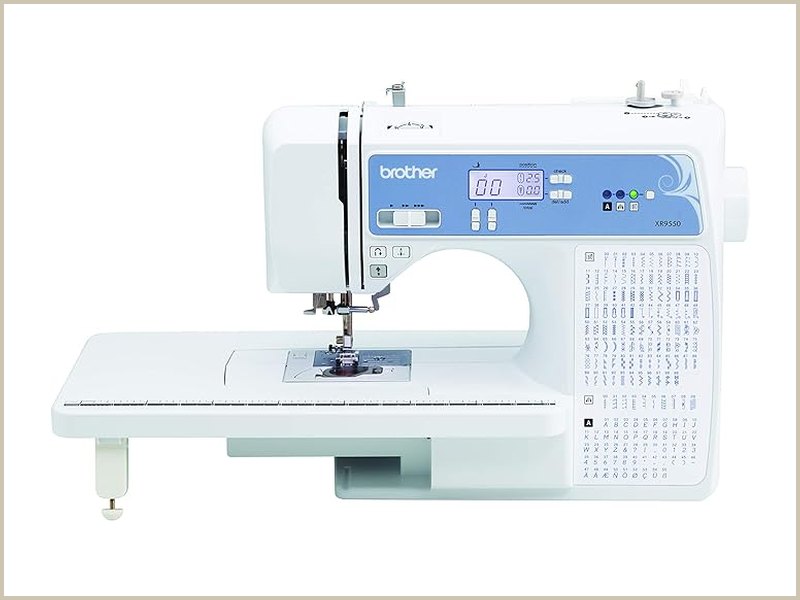
The Brother XR9550 is our top pick for most new quilters. It's affordable, easy to use and comes with almost everything you need to piece and quilt a first project.
You get 165 built-in stitches, including 8 one-step buttonholes and 55 alphanumeric stitches for labels. An LCD screen makes stitch selection simple, and the needle threader and drop-in bobbin take the fuss out of setup.
It comes with 8 presser feet, including a quilting foot, plus a wide table to support your quilt and a hard case. Drop the feed dogs and you can try free-motion quilting on smaller projects.
Pros
- Great value for the features
- Wide table and hard case included
- Easy needle threader and drop-in bobbin
- Light enough to carry to classes
Cons
- Small throat space for big quilts
- Not built for heavy, daily use like a Juki
2. Singer 9960 Quantum Stylist
Best for: quilters who also sew garments and want lots of stitches
- 600 stitches
- Auto thread cutter
- Extension table
- 25 needle positions
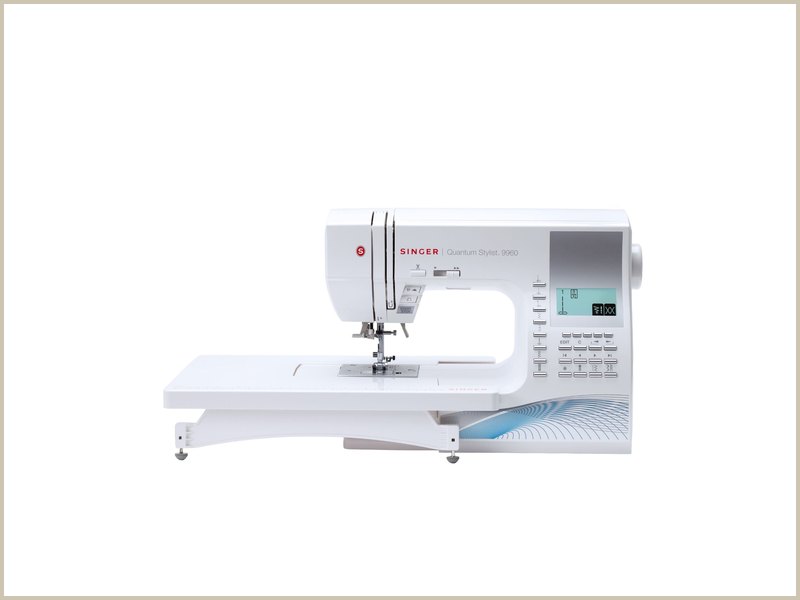
The Singer Quantum Stylist 9960 packs a lot of machine into a mid-range price. It has 600 built-in stitches, 5 fonts for lettering and 13 styles of one-step buttonholes.
Time-savers include an automatic needle threader, a one-touch thread cutter that trims both threads, programmable needle up/down and a top drop-in bobbin. The 7 mm stitch width gives you 25 needle positions for straight stitching, handy for lining up a perfect 1/4 inch seam.
A large extension table comes in the box, giving you a level surface for quilts, along with a big set of accessories and a hard dust cover.
Pros
- Huge stitch library
- Automatic thread cutter
- Extension table included
- Adjustable needle position
Cons
- More stitches than many quilters need
- Menus take time to learn
3. Janome 3160QDC
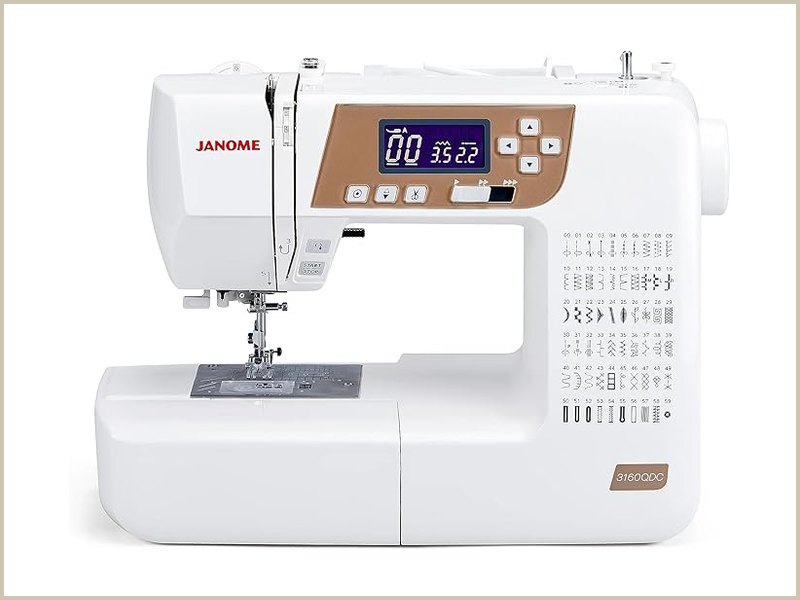
Best for: a light, reliable machine for classes and retreats
- 60 stitches
- 820 stitches/min
- Extension table
- About 12 lbs
Janome is one of the most trusted names among quilters, and the 3160QDC is a favorite take-along machine. It weighs only about 12 pounds, so it's easy to carry to classes, guild meetings and retreats.
It has 60 built-in stitches, including 6 one-step buttonholes, and sews at up to 820 stitches per minute. Janome's Superior Plus Feed System with a 7-piece feed dog keeps layers moving evenly, and there's a top-loading bobbin, one-hand needle threader and memorized needle up/down.
An extension table, hard cover and quilting kit are included. The workspace is about 6.8 inches wide, roomy for a machine this size.
Pros
- Lightweight and portable
- Smooth, even feeding
- Extension table and quilting kit included
- Trusted Janome build
Cons
- Fewer stitches than similarly priced machines
- Workspace is small for king-size quilting
4. Juki TL-2000Qi
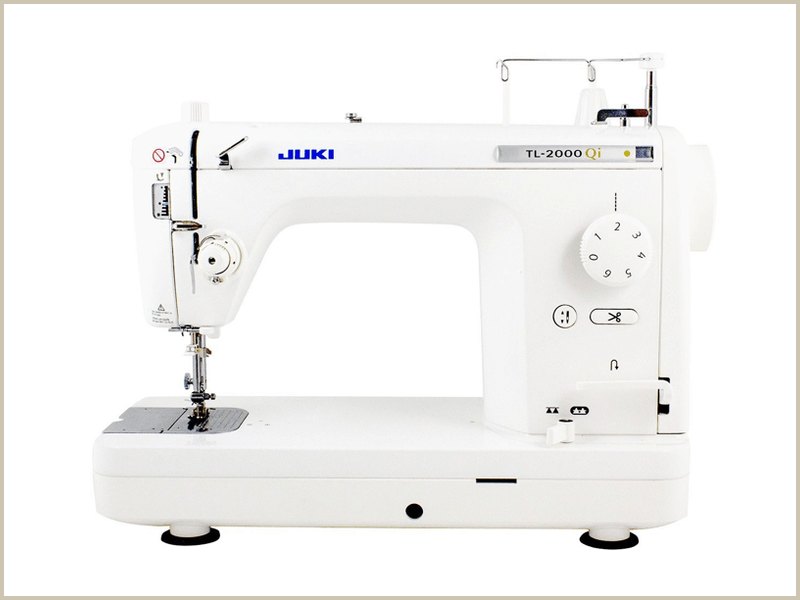
Best for: free-motion quilting and fast, accurate piecing
- Straight stitch only
- 1,500 stitches/min
- 8.5" x 6" throat
- Extension table to 23"
The Juki TL-2000Qi is a quilter's workhorse. It's a straight-stitch machine built on an aluminum die-cast frame, so it runs smoothly with little vibration at up to 1,500 stitches per minute, almost twice the speed of most home machines.
The 8.5 by 6 inch throat space gives you room to push a big quilt through for free-motion or walking-foot quilting. The included extension table widens the work area to 23 inches.
It also has an automatic thread cutter, automatic needle threader, LED lighting, a knee lifter and a walking foot. Because it only sews a straight stitch, it's best as a second machine or for quilters who don't need zigzag or buttonholes.
Pros
- Very fast and steady
- Large throat space
- Automatic thread cutter
- Knee lifter for hands-free lifting
Cons
- Straight stitch only
- Heavier at about 25 lbs
- Costs more than computerized starter machines
5. Brother PQ1600S
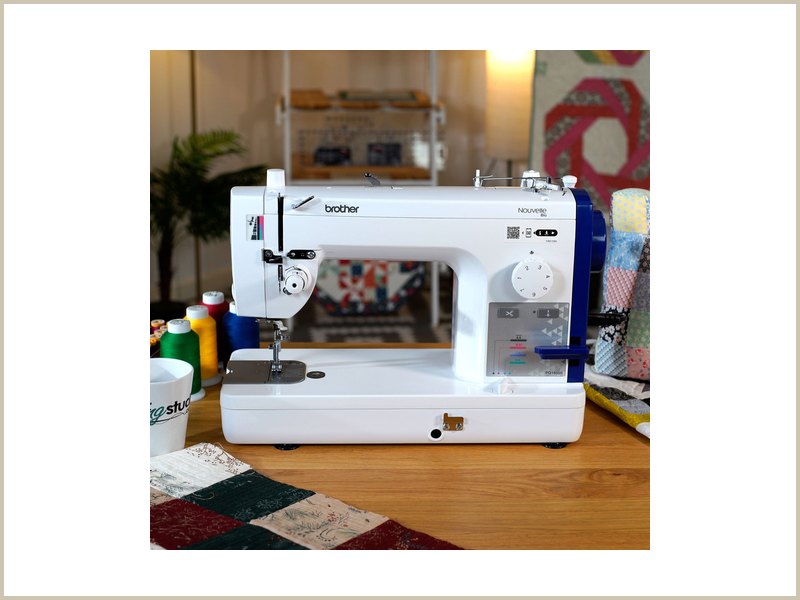
Best for: quilters who want speed and a big workspace
- Straight stitch only
- 1,500 stitches/min
- 8.7" x 5.7" workspace
- Pin feed
The Brother PQ1600S is a high-speed straight-stitch machine made with quilters in mind. It sews at up to 1,500 stitches per minute and has a large 8.7 by 5.7 inch space between the needle and the arm.
A wide 11.1 by 23.3 inch table supports your quilt as you work. Instead of only feed dogs, you can switch to Brother's pin feed, a single pin that rises from below to move every layer evenly, which is great for matching seams and for delicate fabrics.
It has a push-button thread cutter, 4 color-coded feed dog levels, a knee lifter, a built-in cone thread stand and 7 presser feet, including a 1/4 inch foot and a free-motion quilting foot.
Pros
- Fast and precise
- Large workspace and wide table
- Pin feed for even layers
- 7 feet included
Cons
- Straight stitch only
- About 24 lbs, so not very portable
6. EverSewn Charlotte
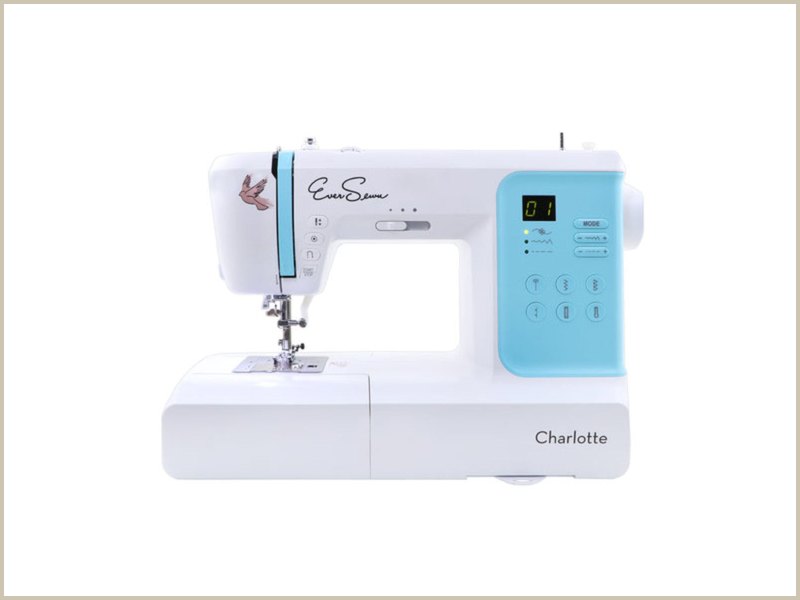
Best for: a light, budget-friendly second machine
- 80 stitches
- 7 mm stitch width
- Metal frame
- About 13 lbs
The EverSewn Charlotte is a compact computerized machine with a full metal frame. At about 13 pounds, it's easy to take to sewing classes or keep as a backup machine.
It has 80 built-in stitches, including practical, decorative, satin, quilting and buttonhole stitches, with a maximum stitch width of 7 mm. An automatic needle threader, speed control and a start/stop button make it easy to control, even without the foot pedal.
EverSewn backs the Charlotte with a 10-year limited warranty, which is generous for a machine at this price.
Pros
- Lightweight with a metal frame
- 80 stitches
- Speed control and start/stop button
- 10-year limited warranty
Cons
- Small workspace for large quilts
- Fewer quilting extras than a dedicated quilting machine
7. Elna Elnita ec60
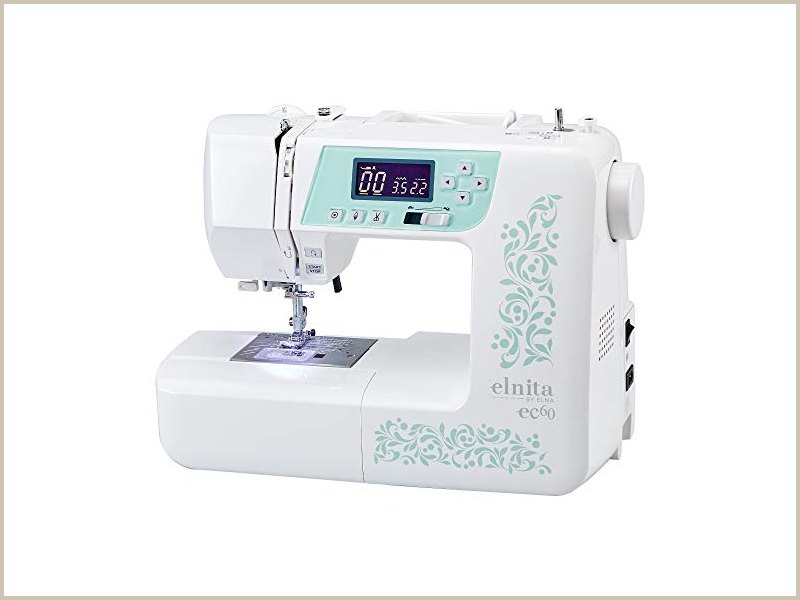
Best for: quilters who want a quality machine that still travels well
- 60 stitches
- 820 stitches/min
- 6.5" throat
- Auto thread cutter
Elna has made sewing machines since the 1930s, and the Elnita ec60 was designed with quilters' needs in mind. It's a full-featured computerized machine in a portable size.
It has 60 built-in stitches, including 6 one-step buttonholes, and sews at up to 820 stitches per minute. A memorized automatic thread cutter, needle up/down and a one-hand needle threader speed up piecing.
There's about 6.5 inches from the needle to the arm, and an extension table and hard case are included. The 7-piece feed dog helps move quilt layers smoothly.
Pros
- Built with quilters in mind
- Automatic thread cutter
- Extension table and hard case
- Smooth feeding
Cons
- Higher price than similar machines
- 60 stitches only
8. Juki HZL-70HW
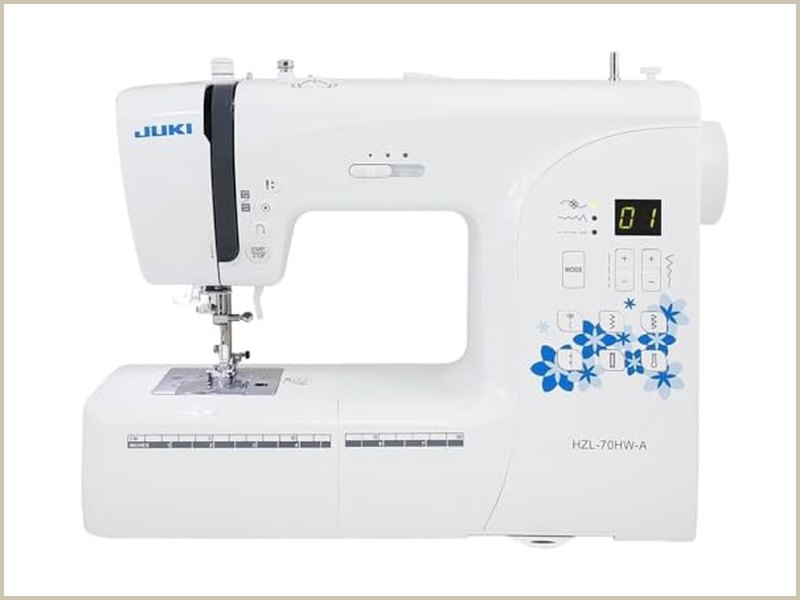
Best for: a compact machine with Juki feed quality
- 80 stitches
- Box feed
- 800 stitches/min
- 6.5" x 4.5" throat
The Juki HZL-70HW brings Juki's box feed system to a compact, affordable machine. Box feed moves the feed dogs in a square path, which keeps fabric from shifting or shrinking as you sew, a big help when matching seams.
It has 80 built-in stitches, including utility, decorative and appliqué stitches and several buttonholes. It sews at up to 800 stitches per minute with a 7 mm maximum zigzag.
An automatic needle threader and start/stop button make it easy to use, and the drop feed lets you free-motion quilt small projects. It weighs about 13 pounds.
Pros
- Box feed for even layers
- Compact and light
- Automatic needle threader
- Start/stop button
Cons
- Small throat space
- Slower than the Juki TL-2000Qi at 800 stitches per minute
Sewing Machines for Quilting FAQs
What kind of sewing machine is best for quilting?
It depends on your projects, budget and skill level. For most beginners, a computerized machine with a wide table, like the Brother XR9550, is the best place to start. If you quilt a lot of large quilts yourself, a straight-stitch machine with a big throat, like the Juki TL-2000Qi, is worth the investment.
What is the difference between a sewing machine and a quilting machine?
There isn't a hard line between them. A "quilting machine" is usually a sewing machine with extras that make quilting easier: a larger throat, an extension table, drop feed dogs and quilting feet. You can make a quilt on any sewing machine.
Can you quilt a king-size quilt on a regular sewing machine?
Yes, but it takes patience. Roll the quilt tightly, support its weight on a large table, and quilt simple straight lines with a walking foot. A machine with a large throat, like the Juki TL-2000Qi or Brother PQ1600S, makes it much easier.
How much throat space do I need for quilting?
About 6 inches is enough for piecing and quilting baby and lap quilts. For throw and bed-size quilts, 8 inches or more makes free-motion quilting much easier.
Do I need an expensive machine to start quilting?
No. Many quilters make beautiful quilts on entry-level machines. Start with an affordable machine you enjoy using, and upgrade later if you find you need more space or speed.
Final Thoughts
The best sewing machine for quilting is the one that fits your projects and your budget. For a first machine, the Brother XR9550 is hard to beat. If you want more stitches, look at the Singer 9960, and if you're ready to quilt big quilts yourself, the Juki TL-2000Qi is a favorite with experienced quilters.
Before you buy, try a machine at a local shop if you can, and bring some scraps to sew. For more options, see our picks for the best Juki sewing machines and portable sewing machines, or set up your space with a sewing table.