Quilting stitches do two jobs at once. They add texture and design to your quilt, and they hold the top, batting and backing together so the quilt lasts for years.
Without enough stitching, the layers shift, the batting bunches up, and a quilt can lose its shape after a few washes.
The good news is you don't need to master every technique. In this guide, I'll explain what quilting stitches are, how far apart to space them, and walk you through the seven most popular quilting stitches, from a simple running stitch to free motion quilting, so you can choose the right one for your next project.
What Are Quilting Stitches?
A quilting stitch is a stitch that you use to sew the layers of your quilt together. These stitches can be created by hand or with a machine. Many quilters use a decorative design with their stitches to add another layer of creativity to their projects.
When choosing the type of quilting stitch you want to use for your project, you can choose from many options ranging from simple quilting stitches (like “stitch in the ditch”) to more complex free-motion quilting designs.
I’ll cover both of these later on in this post.
How Far Apart Should Quilting Stitches Be?
First, you need to check your batting instructions. Most packaged batting informs you how far apart your stitches can be. Depending on the type of batting you choose, this distance could range between 3” and 10”.
Next, you want to decide on the quilting stitch and design you want to accomplish on your quilt. Choosing your design helps you figure out how close your stitches should be.
7 Popular Quilting Stitches to Try
The seven different quilting stitches I highlight here are the most common designs I see for new quilts. You can use many of these styles in various ways or mix them to create a truly unique quilting project.
1. Running Stitch
If you’re wondering, “What stitch do you use for hand quilting? I suggest the running stitch. This stitch is the most popular hand quilting stitch, and for good reason.
It not only holds the layers of your quilt securely, but it also has a beautiful, modern feel because running stitch quilting is usually done in straight lines.
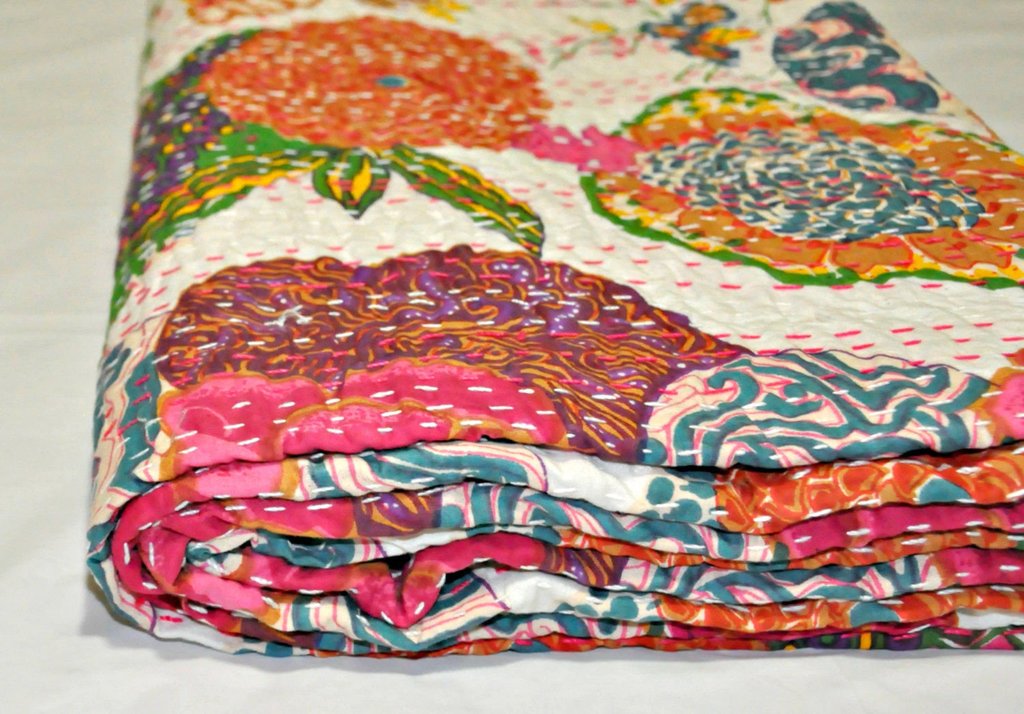
You can use this quilting stitch for the entirety of your quilt or as an accent design for your favorite blocks on your quilt. This accent is a popular design on Kantha quilts like the one pictured below. I love the Bohemian feel of the stitching.
2. Tie Stitch
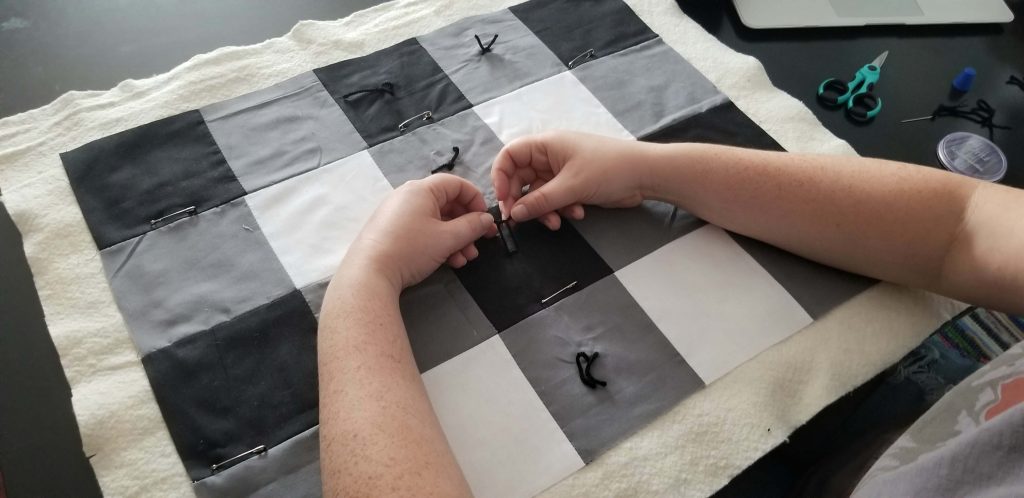
Popular in baby quilts, the tie stitch method uses either embroidery floss or yarn and tying small knots all over the quilt to hold the layers together. This is especially fun for kids because they like extra texture from the small strings of yarn.
The tie stitch is a great beginner stitch since you do it all by hand and once you get the technique down, you can do it fairly quickly.
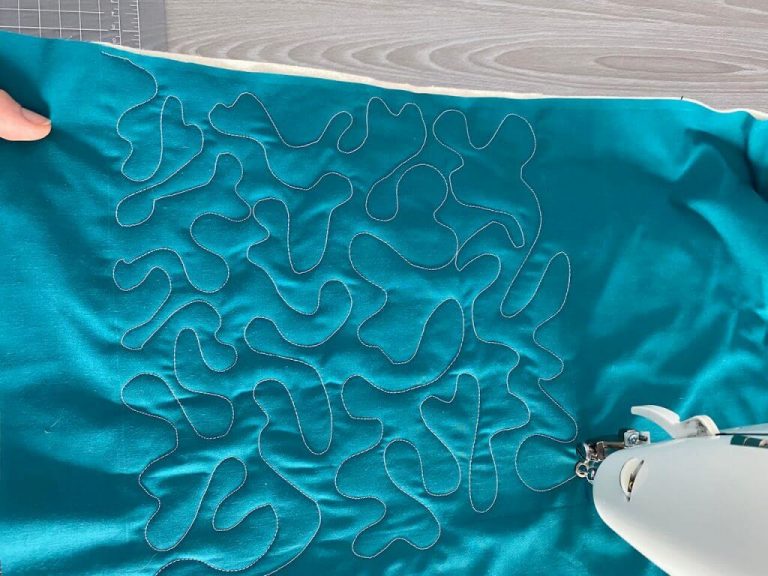
3. Stippling Stitch
The stippling stitch (sometimes called a meandering stitch) is an excellent beginner, free-motion quilting design popular in the modern quilting community. Think of the design as a winding river winding all over the face of your quilt top.
This stitch is fun because it can be a super tight, tiny design like this quilt below.
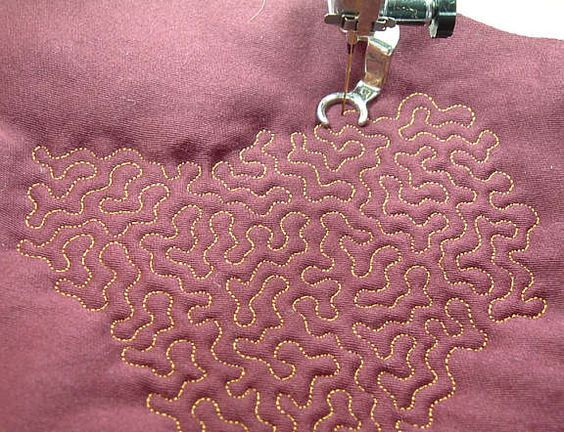
Or it can be a more spread-out design like this example.
4. Stitch in the Ditch
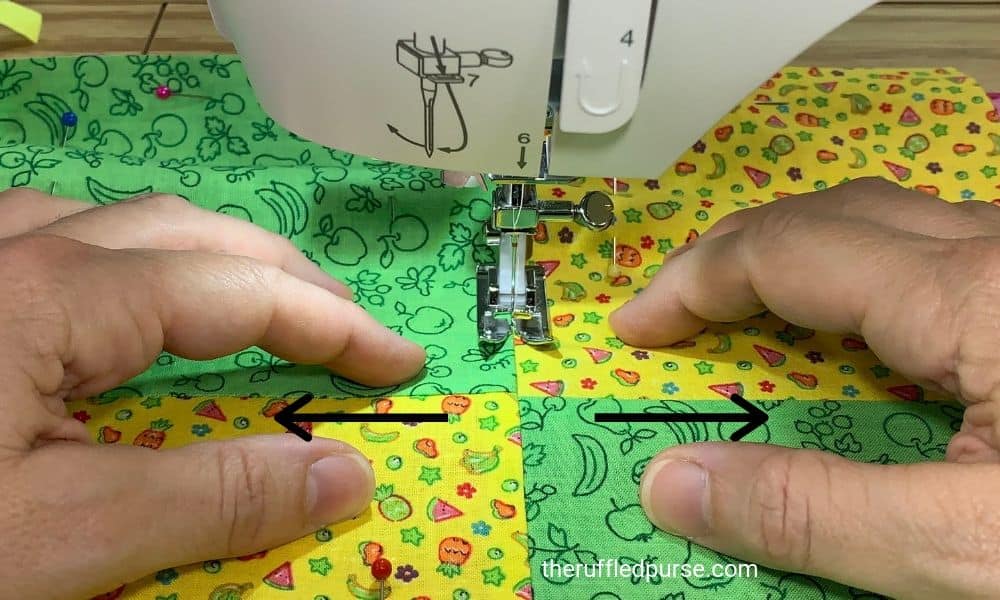
“Stitch in the Ditch” may be a term you have heard before, but you may not know what it means if you are new to quilting. It means you stitch your quilting stitches in the “ditch” of your seams.
By quilting this way, you allow the design of your quilt top to be the shining star, and the quilting is virtually hidden on the top of your quilt. If you are just starting your quilting, I suggest taking it nice and slow to keep your stitches perfectly straight and in the “ditch.”
5. Free Motion Quilting
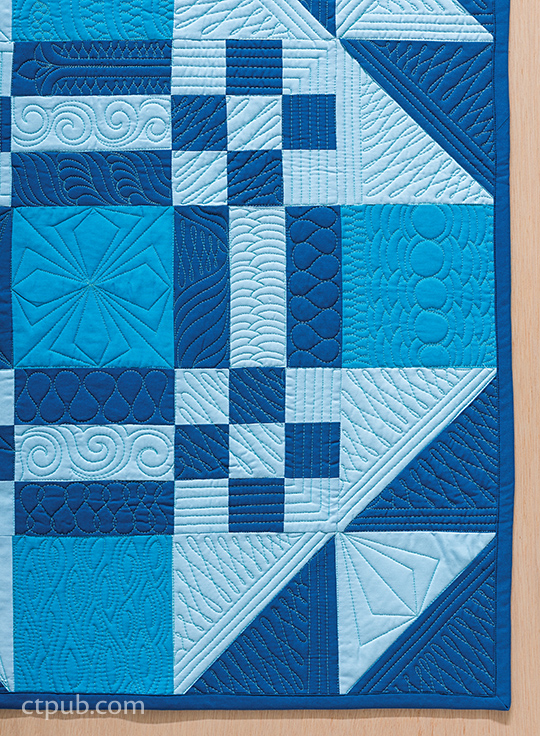
Free Motion Quilting (FMQ) is a broad term for any type of quilting done “freely” with your feed dogs down or covered while using an FMQ foot. As I mentioned, stitch #3 is an FMQ design.
The possibilities are endless when it comes to FMQ. There are hundreds of designs to choose from, or you can even create your very own. It is an art form and should be treated as such. Your design may not look exactly like someone else’s, and that’s what makes it so beautiful!
Here is an example of a piece someone made with several different FMQ designs on one project. Gorgeous, right?
6. Straightline Quilting
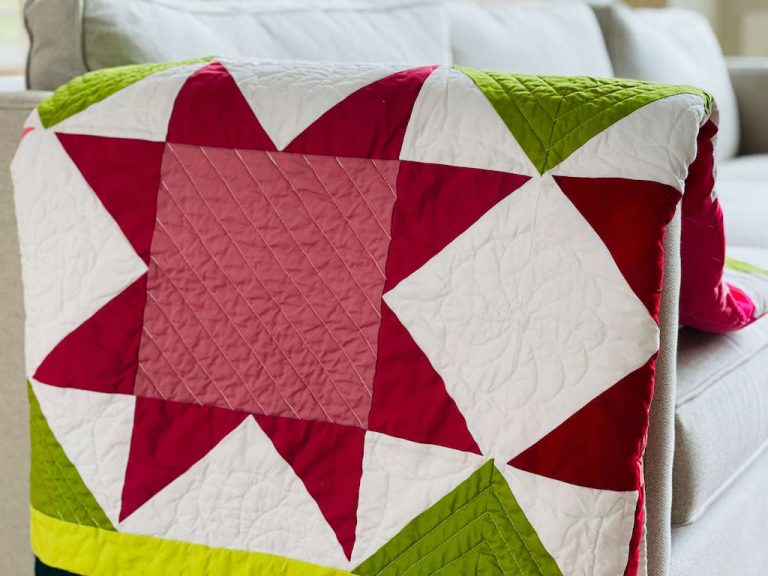
If you are looking for ideas for modern quilting designs, straight-line quilting (SLQ) might be precisely what you are looking for. Clean, straight lines across a quilt are visually pleasing and give the quilt top a soft, plush texture.
This stitch is one of my favorite quilting stitches to do with my machine. I also like to use my walking foot to help feed the quilt through my machine at an even pace.
You can use straight lines in various ways, as demonstrated in this quilt I made (you can find the free pattern here). I used SLQ to fill in blocks in two different ways on this quilt top.
7. Template Stitch
You know those gorgeous floral FMQ designs you see on some quilts and think, “How do they do that?!” Well, I bet most of those quilters used a template to create these beautiful designs. Templates are made from acrylic plastic and come in a wide variety of designs and sizes.
It takes some practice to get used to using templates along with FMQ techniques, but once you get the hang of it, you can create absolutely gorgeous designs on your quilting projects. I’ve even seen several different longarm quilters using these acrylic templates.

More Related Articles
A Quilter’s (And Sewer’s) Guide To The Best Sewing Thread
Make Your Own Quilt Binding With Our Easy Tutorial
Make A Praise-Worthy Cathedral Window Quilt With Our Easy Tutorial
How to Choose the Right Quilting Stitch
- Quilting by hand? The running stitch is the classic choice and works for both straight lines and accent designs.
- Brand new to machine quilting? Stitch in the ditch and straight-line quilting with a walking foot are the easiest places to start.
- Want lots of texture fast? Stippling and free motion quilting cover large areas quickly and hide small wobbles.
- Need a quick finish? Tying a quilt is the fastest way to hold the layers together, especially for baby quilts and comforters.
Whichever stitch you choose, check your batting package for the maximum stitch spacing so your quilt holds up over time.
Which Quilting Stitch Will You Try Next?
Those are seven of the most popular quilting stitches, and each one gives your quilt a different look and feel. Pick one that suits your project and your skill level, then practice on a small quilt sandwich before you move to the real thing.
With a little practice, you can master any of these stitches. Quilting is your chance to add one more layer of creativity on top of your pieced design, so have fun with it and happy stitching!