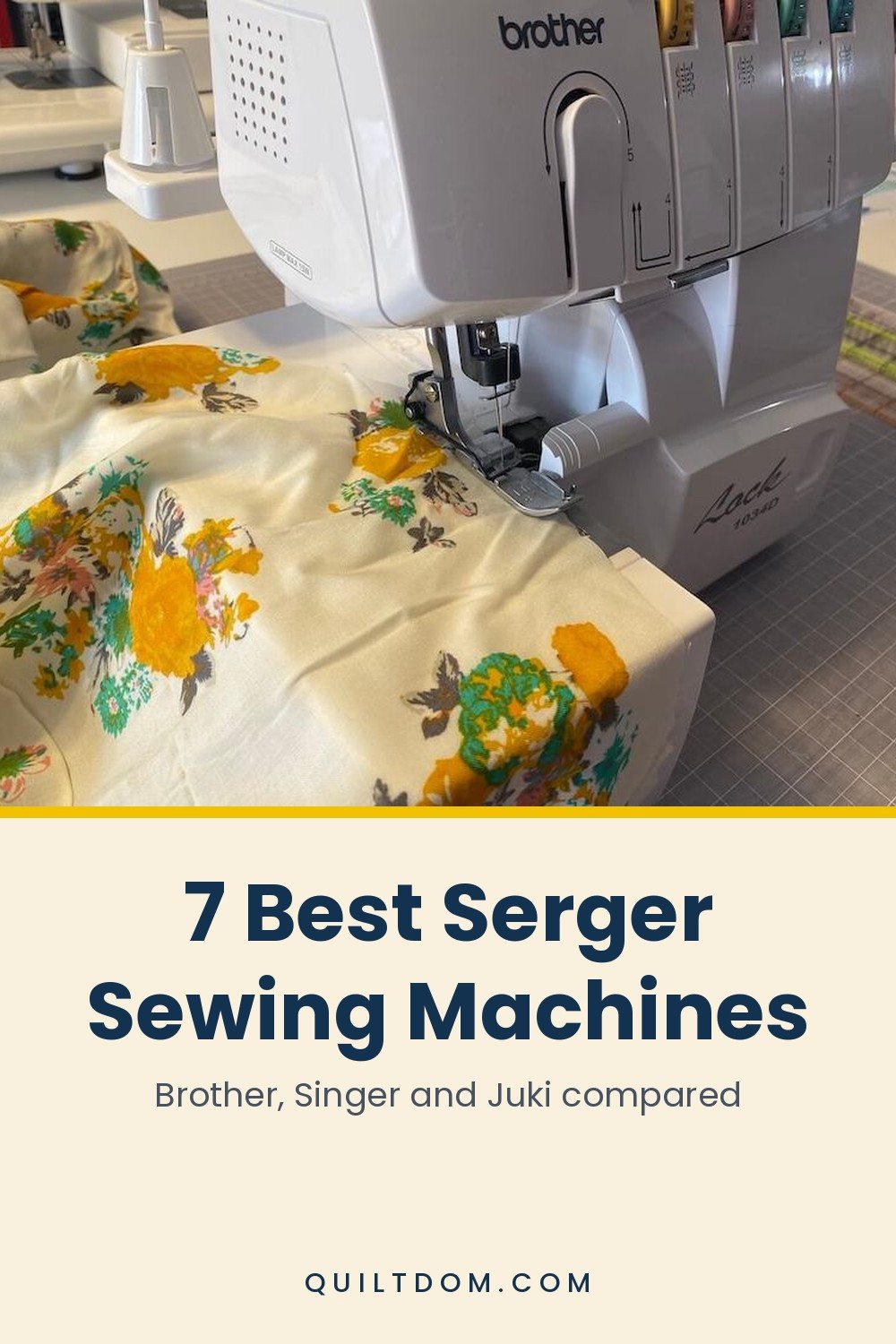
A serger sews a seam, trims the extra fabric and wraps the raw edge in thread, all in one pass. It's the machine behind the neat, stretchy seams on store-bought clothes, and it's a time-saver for quilters who also sew garments, bags and quilted gifts.
But with so many models and a wide range of prices, choosing one can feel confusing. Below are the 7 best serger sewing machines from Brother, Singer and Juki, with the specs that matter and who each one suits best.
Our Top Picks
- Best overall: Brother 1034D, easy to learn and a proven favorite
- Best for rolled hems on a budget: Singer S0230, with 2, 3 and 4-thread stitches
- Best for heavy fabrics: Brother ST4031HD, with a big extension table
- Best premium: Juki MO-655, with chain stitch and 5-thread seams
Best Serger Sewing Machines at a Glance
| Serger | Threads | Stitches/min | Best for | Price |
|---|---|---|---|---|
| Brother 1034D | 3/4 | 1,300 | Beginners | $ |
| Singer S0230 | 2/3/4 | 1,300 | Budget rolled hems | $ |
| Juki MO-114D | 2/3/4 | 1,500 | Speed and precision | $$$ |
| Singer S0100 | 2/3/4 | 1,300 | Garment sewing | $ |
| Juki MO-644D | 2/3/4 | 1,500 | Mid-range Juki | $$ |
| Brother ST4031HD | 3/4 | 1,300 | Heavy fabrics | $$ |
| Juki MO-655 | 2/3/4/5 | 1,500 | Advanced sewists | $$$ |
Price guide: $ is a starter serger, $$ is mid-range and $$$ is a premium machine. Prices change often, so check the current price on Amazon.
What to Look for in a Serger
A serger can look intimidating, with its extra dials and four or more spools of thread. Break it down feature by feature and it's simple:
- Thread capacity. Most home sergers use 3 or 4 threads. A 2-thread option adds light rolled hems and flatlock seams, and a 5-thread machine adds a chain stitch.
- Differential feed. This adjusts how the fabric feeds, so knits don't stretch and lightweight fabrics don't pucker. Every machine on this list has it.
- Speed. Sergers are fast. Expect 1,300 to 1,500 stitches per minute, much faster than a regular sewing machine.
- Threading help. Color-coded thread paths and a lower looper threader make setup much easier, especially for beginners.
- Rolled hem. Look for a built-in rolled hem that you set with a lever or dial instead of changing plates.
- Free arm and work space. A free arm helps with sleeves and cuffs, and an extension table supports heavy or bulky fabric.
Not sure whether you need a serger or a sewing machine? Our guide to the difference between a serger and a sewing machine explains what each does best.
The 7 Best Serger Sewing Machines
These sergers come from well-known brands at a range of prices, from beginner-friendly models to a premium 5-thread machine.
1. Brother 1034D Serger
Best for: beginners and everyday seam finishing
- 3 or 4 threads
- 1,300 stitches/min
- Differential feed
- 3 presser feet
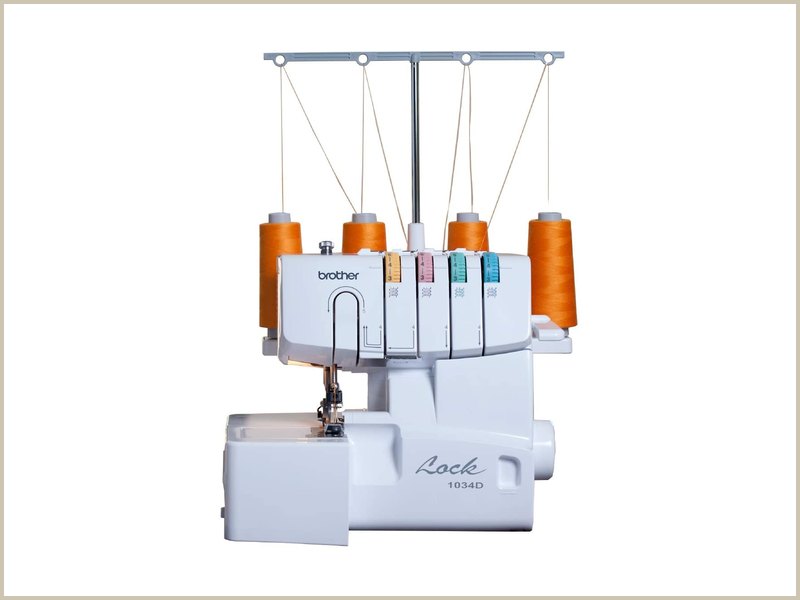
The Brother 1034D is one of the most popular first sergers, and for good reason. It's simple to learn, with color-coded threading guides and a lower looper threader that takes the hardest part of serger threading off your hands.
It sews 4-thread and 3-thread overlock, narrow hem, rolled hem and ribbon lock stitches at up to 1,300 stitches per minute. Differential feed keeps knits and very thin fabrics from stretching or puckering, and the stitch width adjusts from 3 to 7 mm.
It comes with three snap-on feet (standard, gathering and blind stitch) and a free arm for sleeves and cuffs. I own this machine, and it has handled everything from quilt backing seams to knit tees.
Pros
- Easy to learn
- Lower looper threader
- Differential feed
- Long track record with sewists
Cons
- No 2-thread stitches
- Printed manual is thin on troubleshooting
2. Singer S0230 Serger
Best for: 2-thread rolled hems on a budget
- 2, 3 or 4 threads
- 1,300 stitches/min
- Differential feed
- Free arm
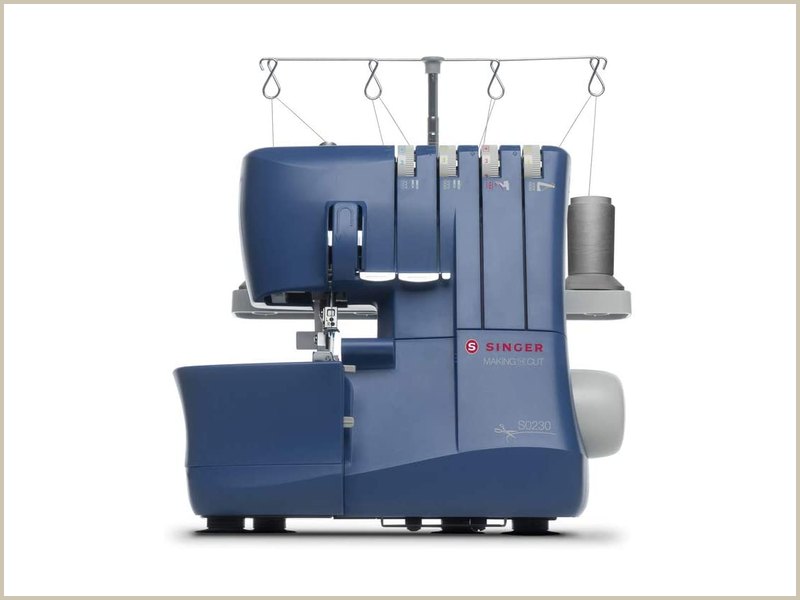
Singer's S0230 gives you more stitch options than most sergers at its price. It sews with 2, 3 or 4 threads, so you can do lightweight 2-thread rolled hems and flatlock as well as sturdy 4-thread seams.
Differential feed prevents stretched or puckered seams on knits and sheers, and the free arm makes small sleeves, cuffs and children's clothes easy to serge. It runs at up to 1,300 stitches per minute.
Color-coded threading and adjustable tensions make it a friendly choice for a first serger.
Pros
- 2/3/4 thread flexibility
- Free arm for small openings
- Differential feed
- Friendly to beginners
Cons
- Manual could be more detailed
- Replacement parts can be harder to find than for Brother
3. Juki MO-114D Serger
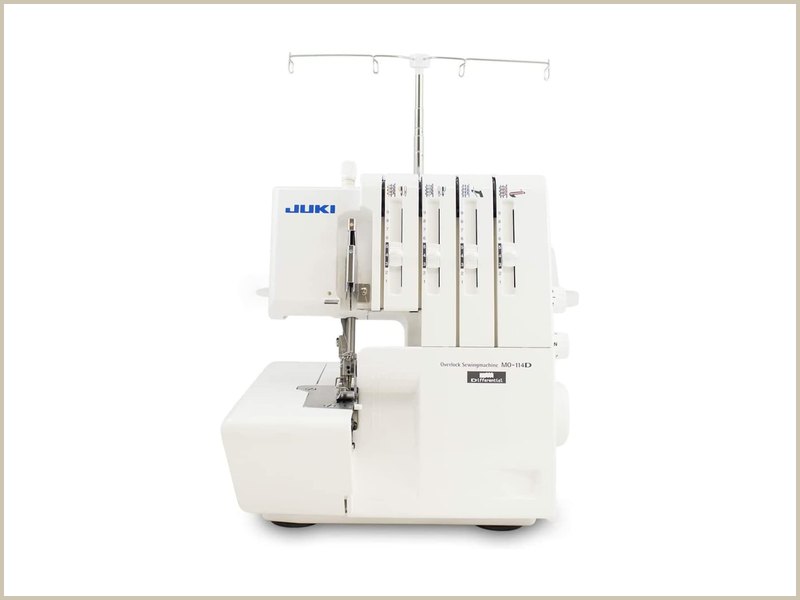
Best for: sewists who want speed and precision
- 2, 3 or 4 threads
- 1,500 stitches/min
- Auto rolled hem
- Lower looper threader
Juki is known for its industrial machines, and the MO-114D brings that build quality home. It's one of the fastest sergers on this list at up to 1,500 stitches per minute.
It handles 2, 3 and 4-thread stitches, including a built-in rolled hem you set without changing plates. The differential feed dial is on the outside of the machine, so you can adjust it while you sew. A lower looper threader makes setup easier.
It weighs about 15 1/2 pounds, which keeps it steady at high speed without being hard to move.
Pros
- Fast 1,500 stitches/min
- Built-in rolled hem
- Easy-to-reach differential feed dial
- Solid, steady build
Cons
- Costs more than Brother and Singer starter models
4. Singer S0100 Serger
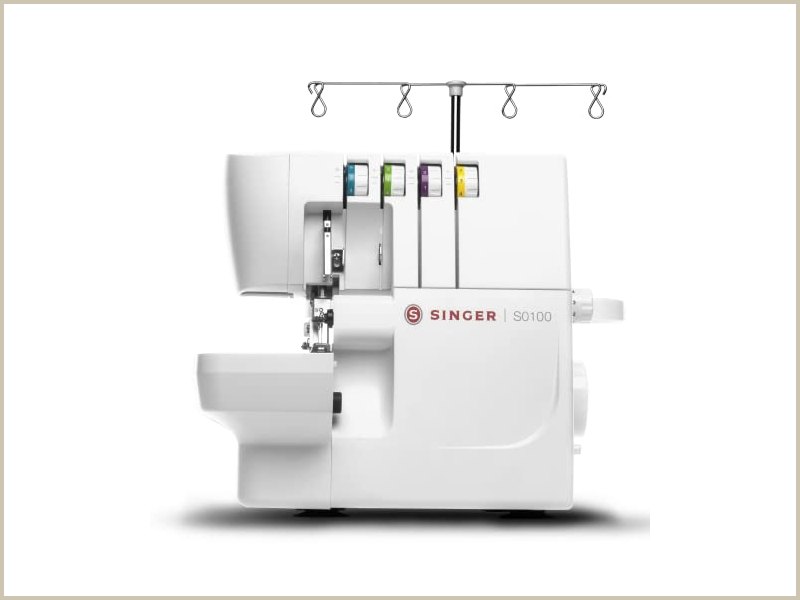
Best for: garment makers who want lots of stitch options
- 2, 3 or 4 threads
- 1,300 stitches/min
- LED light
- 6 stitch types
The Singer S0100 is a good value if you plan to sew clothing. It offers 2, 3 and 4-thread stitches and six stitch types, from 4-thread construction seams to 2-thread rolled hems.
A long-lasting LED light brightens the work area and threading paths, which is a real help with a serger. Color-coded threading, differential feed and a free arm for hems and cuffs round out the features.
Included accessories cover the basics: an all-purpose foot, tweezers, spare needles, cone adapters and a screwdriver.
Pros
- Bright LED lighting
- 6 stitch types
- Free arm
- Differential feed
Cons
- Compact size feels small for big projects
5. Juki MO-644D Serger
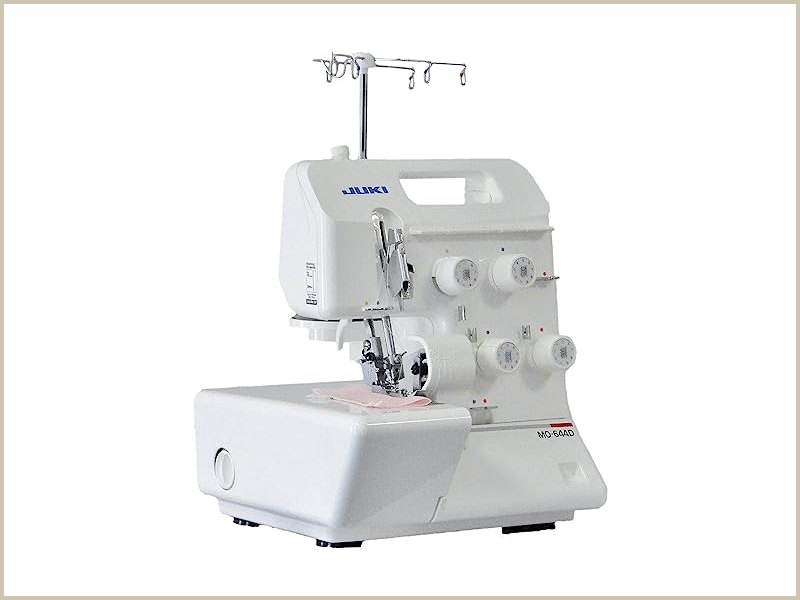
Best for: a dependable Juki at a mid-range price
- 2, 3 or 4 threads
- 1,500 stitches/min
- Auto rolled hem
- Color-coded threading
The MO-644D is Juki's long-running, budget-friendly serger, and sewists still recommend it. It's a 2-needle, 2/3/4-thread machine with built-in rolled hemming and differential feed.
Like the MO-114D, it sews at up to 1,500 stitches per minute. Color-coded thread paths make threading easier, though like any serger it takes a little practice.
At about 15 pounds, it's portable enough to carry to a class or retreat.
Pros
- Fast 1,500 stitches/min
- Built-in rolled hem
- Portable
- Trusted Juki build
Cons
- Threading takes practice
- Fewer features than the newer Juki models
6. Brother ST4031HD Strong & Tough Serger
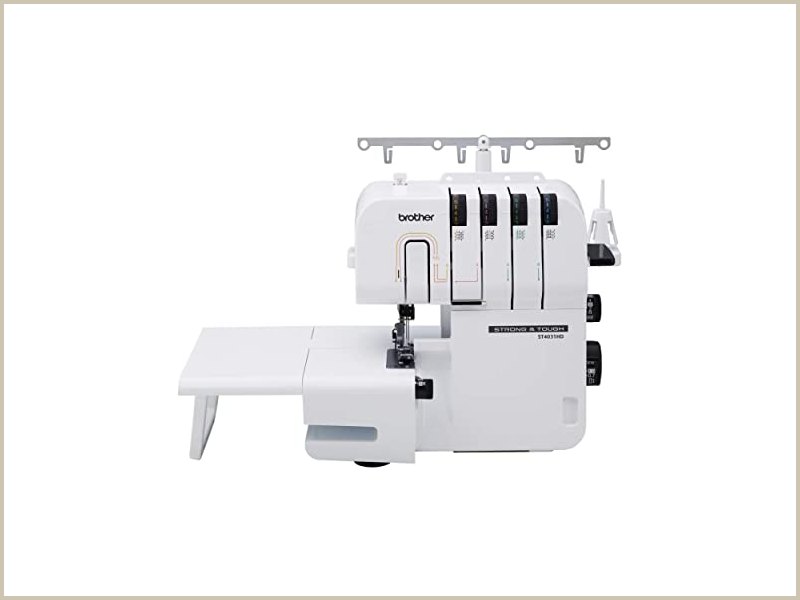
Best for: heavy fabrics like denim and canvas
- 3 or 4 threads
- 1,300 stitches/min
- Extension table
- Hard-metal blade
Part of Brother's Strong & Tough line, the ST4031HD is built for thick projects. Brother says it serges multiple layers of denim and layered knits with confidence.
The first thing you'll notice is the large extension table. It keeps heavy fabric level with the needle, so the weight doesn't pull on the needle and thread. The blade is made from extra-hard metal for a cleaner cut edge.
It sews at up to 1,300 stitches per minute and comes with standard, blind stitch and gathering feet. Color-coded guides and numbered loopers make threading straightforward.
Pros
- Handles heavy fabrics
- Large extension table
- Durable blade
- 3 feet included
Cons
- 3 and 4-thread stitches only
- Costs more than the Brother 1034D
7. Juki MO-655 Serger (5 Thread)
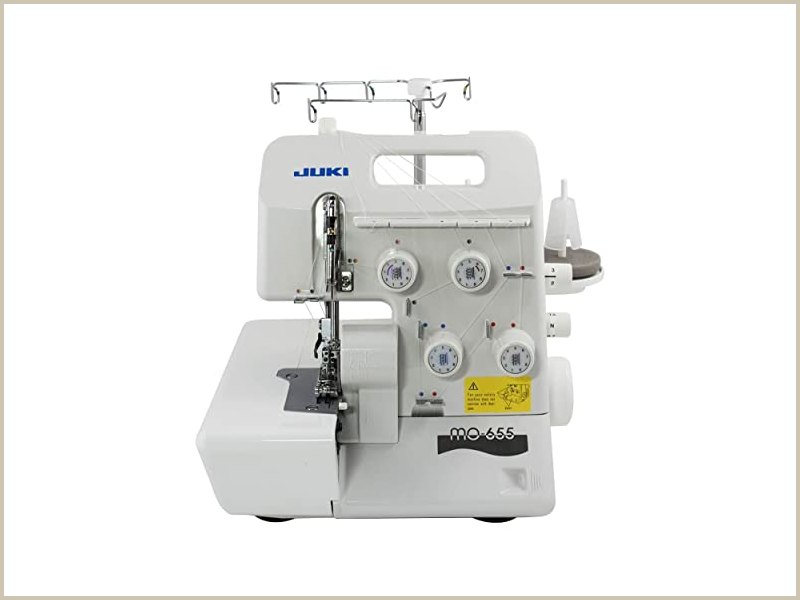
Best for: advanced sewists who want chain stitch and 5-thread seams
- 2, 3, 4 or 5 threads
- 1,500 stitches/min
- Chain stitch
- Auto rolled hem
The MO-655 is the most capable machine on this list. Along with the usual 2, 3 and 4-thread stitches, it sews a 2-thread chain stitch and a 5-thread safety stitch, which is a chain-stitched seam and an overlock edge in one pass.
The chain stitch is handy for basting and decorative stitching too. Differential feed, a heavy-duty knife and built-in rolled hemming are all standard, and it sews at up to 1,500 stitches per minute.
If you don't need the chain stitch or 5-thread seam, the Juki MO-654DE is a simpler 4-thread option from the same family.
Pros
- 5-thread safety stitch
- Chain stitch
- Fast 1,500 stitches/min
- Industrial-style build
Cons
- Most expensive on this list
- More to learn for a beginner
Do Quilters Need a Serger?
You don't need a serger to make a quilt. Quilt seams are pressed and quilted in place, so they don't need an overlocked edge. Your sewing machine does the piecing.
But a serger is handy for quilters who also sew other things. It's great for:
- Finishing raw fabric edges before you prewash, so the yardage doesn't fray
- Quilted garments like a quilted jacket, where the inside seams show
- Joining knit fabrics for T-shirt quilts and finishing the edges of minky or fleece backings
- Bags, pillowcases and home decor projects
Serger FAQs
What is the difference between a serger and an overlock machine?
They're the same thing. "Serger" is the common name in the US, and "overlocker" or "overlock machine" is used in the UK and other countries.
Is a serger hard to learn?
The hardest part is threading, and it gets easier with practice. Color-coded thread paths and a lower looper threader, like the ones on the Brother 1034D and Juki MO-114D, make it much simpler.
What does differential feed do on a serger?
It changes how fast the front and back feed dogs move. That keeps stretchy knits from waving and stretching, and stops lightweight fabrics from puckering.
Can a serger replace a sewing machine?
No. A serger is great for seams and edges, but it can't sew buttonholes, topstitch or piece a quilt with an accurate 1/4 inch seam. Most sewists use both.
How many threads do I need on a serger?
A 3/4-thread serger covers most projects. Choose a 2/3/4-thread model if you want light rolled hems and flatlock, or a 5-thread model if you want a chain stitch and safety stitch seams.
Final Thoughts
A serger is an investment, but it gives your sewing a clean, professional finish that lasts through many washes. For most people, the Brother 1034D is the best place to start. If you sew heavy fabrics, go for the Brother ST4031HD, and if you want every option, the Juki MO-655 is hard to beat.
Want to set up the rest of your sewing space? See our picks for the best sewing tables and portable sewing machines.